Category: Uncategorized

  • Standards check Test & ADI Part 3 test

    Standards Check Test & ADI part 3 test Advice

    ADI part 3 training

    When reflecting on failure on a part 3 or standards Check Test, take a moment to reflect on what the examiner has said and what their coment’s actually translate too.

    • The lesson didn’t fit the clients needs
    • You need to be ahead of your learner
    •  You didn’t help your pupil reflect correctly
    •  You was over or under instructing
    • What learning took place?

    Above can be some of the main reasons the examiner will focus on as to why you’ve not been successful on your part 3 or standards Check Test. Keep reading to learn how each comment relates to certain competencies on the marking sheet.

    Your Standards Check Test didn’t Fit the Needs of Your Client

    This feedback links to your lesson planning, in particular the goal and the structure of your lesson. Below I’ve outlined how a goal would be formulated and how you would structure it to make it a good Client centered session.

    Did the trainer identify the pupil’s learning goals and needs?

    This competency should be all about what learning needs to take place?

    your pupil has issues with right turns at junctions, he/she may’ve cut a corner but after this has been mastered where could you take this lesson, to help your learner achieve their goal/s?

    • Is this just a one off with one particular turn?
    • Have you fully assessed your pupil on a full range of right turns?
    standards check test and adi part3 test advice

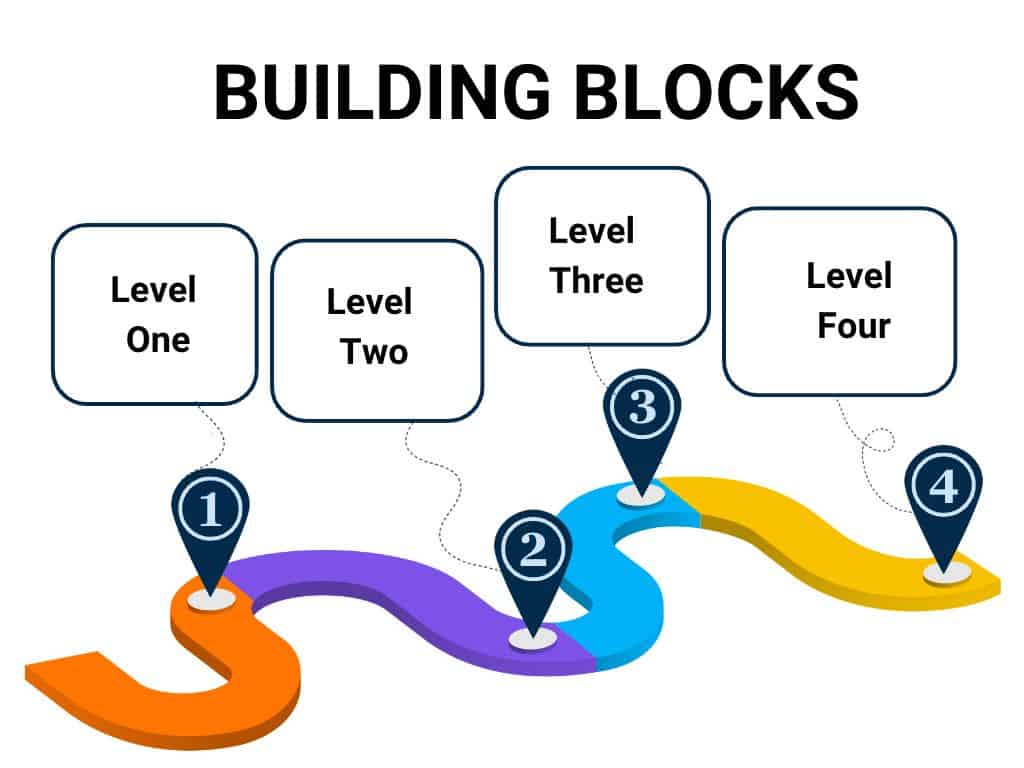
    A good way of looking at this is, you may have 4 levels of right turns.

    • Level one = major to minor easy
    • Level two = major to minor harder
    • Level three = traffic lights Right Turn easy
    • Level four = traffic lights Right Turn harder

    Level two maybe where the mistake was made, but how confident are you he/she won’t make a mistake with more complex junctions or when you give your client more responsibility.

    Over or under Instructing on Your Test

    Finding the correct level of instruction to match the needs of your client should be evaluated when your structuring your clients lesson.

    • Did the trainer structure the lesson to match the pupils ability and needs?

    If you fully assess the four levels above thouroghly then you will have a clear plan of the following:

    • Where learning needs to take place
    •  How much instruction will be needed when dealing with each challenge or level you need to take the lesson too.


    Staying ahead of Your learner on your Test

    Once a clear understanding on where your learners strengths and weaknesses are, this is now where you should be in tune with this compentency.

    • Did the trainer ensure the pupil fully understood how responsibility for risk would be shared?

    In a nutshell, this competency is about how much help your client needs and outlining it and agreeing it. When you start your Part 3 or Standards check test, this will be what’s discussed prior to the wheels moving. 
    Pass your ADI Part3 Test
    • Was the trainers directions and instructions timely and appropriate
    • Was the trainer aware of the surroundings and the pupils actions?

    Being ahead of your learner will take a proactive approach to knowing when intervention is needed.

    Example: If your pupil is cutting corners then what indicators are there that the turn could end up being dangerous.

    • Speed coming into fast.
    • Position looks like it’s drifting
    • Looking into the road indicating they’re trying to beat the oncoming car


    LEVEL OF INSTRUCTION

    So you decided Q,+A to begin with, but your pupil is now about to do one of the 3 above – then you need to ask yourself is Q+A working and what intervention? is needed to manage the risk.

    • Rephrasing or a different question?
    • Full talk through?
    • Physical intervention


    DIRECTIONS & INSTRUCTIONS

    A contributing factor in all this, is the timings of your directions and instructions. If they’re not timed to match your pupils ability and needs they could be inducing faults – so you’ll also need to analyse this too.

    Helping your pupil reflect correctly

    Helping your learner to reflect takes good listening skills and affective questioning.
    Asking questions that just get a yes or no answer, may in the moment allow you to stay in control (of your learner) and probably lead you to think your learner has a good understanding, but without further questioning you’re probably not challenging their understanding enough.


    EXAMPLE

    “just explain to me where your turning point is when turning right.”


    If you’ve asked that question enough times and practiced it, you’ll probably get the correct answer in theory and a good demonstration too.

    A cavaet to this maybe when would it be necessary to cut the corner? Maybe he/she doesn’t know the answer – which isn’t a problem, but now you can use this as a good opportunity to get/him her to reflect and allow learning to take place.


    SERIOUS & CRITICAL FAULT

    Mistakes can happen to the best of us and as an experience driver I maybe able to reflect on:

    • The mistake I made
      Why it had the potential to be serious or even a dangerous driving error.
    • With reflection and revisiting it am I now confident I’ve developed and feel confident with this area going forward.

    Now look at the same problem in the eyes of a an inexperienced driver?

    • Is he/she aware of the severity of the driving error?
    • Is she/he aware of why it happened?
    • Is she/he aware of what needs to be done when revisting and how to go about developing this issue?
     

    Conclusion

    @evolution driving school we believe by getting your learner to reflect on the fault, analysing it and finding the solution will help you to understand any gaps in their knowledge and help him/her engaged with their learning process.

  • Learn how you can Become a driving instructor

    How hard is it to become a driving instructor?

    By Paul Roach

    The journey to become a driving instructor can be a bit hit or miss for so many, given the overall pass rate for everyone who applies to become a driving instructor and then actually succeeded after attempting to pass all three tests, is as low as 8%.

    So why are only 8/100 people going on to qualify to become an approved driving instructor? Let’s start from the beginning and explain what the qualifying process entails.

    Become an instructor first you’ll need to pass the ADI part 1 test

    If you didn’t know already the first test on your journey to become a driving instructor is a theory test. This test is very similar to a learner drivers theory test, given that you’ll be tested on multiple choice questions and a hazard perception test.

    There’re a 100 multiple choice questions which are grouped into four bands. Each Band will have a score value of 25 points. On each of the 4 bands you must score at least 20/25 points on the following bands:

    BAND 1 

    1. Road procedure

    BAND 2

    1. Traffic signs and signals
    2. Pedestrians
    3. Car control
    4. Mechanical Knowledge

    BAND 3

    1. Driving Test
    2. Disabilities

    BAND 4

    1. Instructional Techniques
    2. Publications

    The overall pass mark is 85/100. The questions that will be used, will be randomly selected from a memory bank of a 1000 questions.

    The second element of the part 1 test is the Hazard perception test. This test is designed to test your ability to spot a hazard on the road.
     
    There’re 14 clips and each scoring hazard has a score value of  0-5 points. The pass mark for this test is: 57/75 points.
    ADI part 1hazard perception test

    Test Stats

    Based on data recorded by the DVSA the pass rate for the ADI part 1 test is 55%

    It’s a little unknown what happens to the remaining 45%? However, it’s hard to comprehend why anyone would give up at this point? As the amount of attempts you can have at passing the part 1 test is unlimited !

    One of the main reasons why PDI’S fail their Part 1 Test is due to only focusing on repeatedly taking mock tests and trying to pass the test via rote learning, ie: memorising the answers.

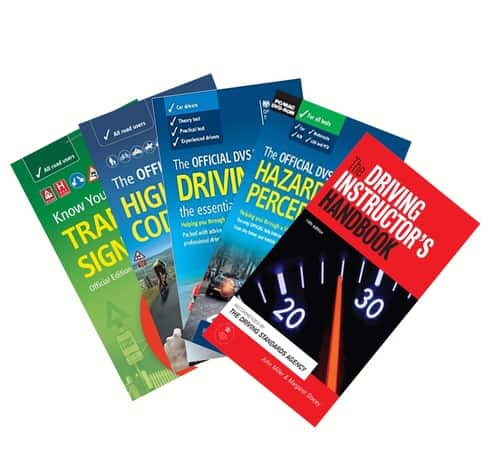
    Absorbing the knowledge you’ll need to pass the part 1 test should be gained from a combination of rote learning and reading the following books:

    training to become a driving instructor

    Similar to the Multiple choice test, the Hazard perception test shouldn’t be rehearsed too much either. For the best possible results when Practicing the HPT:

    • Don’t keep practicing the same video clips.
    • Avoid trying to cheat the video via machine gun clicking.
    • Review all your videos, even the ones you score well on as the summary will help you going forward.

    Pass the ADI Part 2 Test and your one step closer to becoming a driving instructor

    ADI part 2 test

    The second test you must pass on your journey to become a driving instructor is a driving test. 

    The test will last for 60 minutes. To pass – You must not commit a dangerous or serious fault. Also a cumulative of 6 minor faults or more will result in failing the test too.

    There’re 5 parts to the ADI Part 2 driving test:

    • an eyesight check
    • ‘show me, tell me’ vehicle safety questions
    • general driving ability
    • manoeuvres
    • independent driving

    On the whole the part 2 test is similar to the learner drivers driving test, that you may’ve already passed. However it should be noted – the driving examiner will be looking for a much higher standard of driving to pass this test.

    There’s no specific data highlighting why PDI’S fail the test  – however with a pass rate of 51% – it underlines that many are falling short to meet the required standard.

    Given that you have only 3 attempts to pass this test emphasises the importance to be thorough with your preparation.

    ‘Old habits do die hard.’ So make sure you incorporate what’s required to Pass the ADI part 2 within your private practice and not just the sessions, you have with your ADI Trainer.

    Part 3 Test the final step to becoming a fully qualified driving instructor

    The final test on your journey to become a driving instructor is the part 3 test. This test will assess your ability to teach a learner driver within a 1 hour driving lesson.

    The session will start with you having a formal chat with a senior examiner (who will be examining your test) about the lesson you’ve got planned with your student.

    Your test will be recorded using the examiners marking sheet. The sheet is categorised into 3 sections with sub headings entered below. Each subheading has a score value of 0-4.

    Once the test is completed, the examiner will assess how you performed and enter a score on every subheading you can see on the sheet. The points will then be added up and will determine the outcome of your test.

    A score of 0-31 would result in a failed test. Anything between 31-50 would be a pass and would mean you’re now a fully qualified ADI with no more tests to pass.

    Once you become an ADI you’ll have a periodic standards check test, which all approved driving instructors have to do every 2/4 years to remain on the ADI register. The format of this test is identical to a part 3 test in how it’ll be marked.

    PRACTICE MAKES PERFECT

    Their is a minimum of 40 hours basic training you must complete with an Instructor trainer before you can take the test.

    If you fail, you must then take an additional 5 hours of further training before having another attempt at your part 3 test.

    The pass rate for the part 3 nationally is 34.7% Which is almost equivalent to 1/3 people succeeding at this stage.

    Given that so many fail at this stage highlights that 40/50 hours training may not have been enough for so many.

    I myself must have taken 50 hours training with a national company. Then I had a further 15 hours training, with a private trainer.

    Like so many others I went into my training course without fully understanding how hard it actually is to become a driving instructor.

    Making the same mistakes as I and others have can be avoided by getting a deeper understanding of what the part  test entails. You can do this by visiting this link – which the DVSA have published the National standards for driver and rider training.

    You’ve heard the saying ‘fail to prepare then prepare to fail’? Given that 40 hours is a minimum requirement (from the DVSA) of hours you should receive before you can take a part 3 test.

    It doesn’t mean you should just ‘have a go at the test and see what happens’ like so many do !

    Just remember you’ve only got 3 attempts at passing the part 3 test. Choose your attempts wisely, or you may find you can easily fail all 3 tests and If you do, you’ll then have to start from the beginning of the course again.

    Our Conclusion

    Don’t just look at the course to become a driving instructor as a serious of tests, as the course itself maybe your only education for your career ahead.

    Ask yourself what do you want to gain from your instructor trainer? A platform to pass all 3 tests? or a mentor who’ll help you to become the best driving instructor you could possibly be.

  • Save money off your driving lessons

    Save money off your driving lessons

    The overall cost of driving lessons in Liverpool, including tests, can cost around £1200. Unfortunately, all too often a lot of learner drivers can end up spending  more money than is necessary throughout their driving course. Luckily for you, we’ve put together a 5 step guide – designed to save you money off your driving lessons. 

    Save money off your driving Lessons by doubling your tuition

    Double your tuition time each week to help you memorise your routines. Recently we conducted a survey in our driving school and found (on average) 10 learner drivers who had two one hour driving lessons each week passed their driving test quicker than 10 others, who had just one hour each week. This saved them approximately £135 off the total cost of their driving lessons. How is this possible? 

    h

    To put it into perspective, compare a driving lesson to a couple of subjects/skills you’ve learnt in life. Then ask yourself, did one hour a week cut it? Or did you need more time to practice to retain what you had learnt the week before? The same theory applies to a driving lesson. More practice each week = less time consolidating on what you’ve already learnt.

    Pass your theory test as soon as you can to save money off your driving lessons

    Don’t leave it too late to pass the Theory Test. Making sure you’ve passed your theory test earlier rather than later is an essential requirement. By doing this you’ll save yourself quite a bit of money off the cost of your driving lessons. Many learners who are ready to take a practical driving test, sometimes cannot book one as they have not yet passed their theory test.

    This can then lead to two options. Continue to take driving lessons each week, or stop until you’ve passed your theory test. Unfortunately either option will end up costing you more money and may end up costing £130 on unnecessary driving lessons. The solution: Set a target date for your theory test. Try to factor in the theory test and practical driving test waiting times for your area. You can do this via the DVSA website.

    We would recommend aiming to pass the theory test a month or two before you anticipate needing to book a practical driving test.

    Private practice can be a great way to bring down the overall cost of your driving Lessons

    Getting some extra practice in with parents or guardians could save you a fortune and will definitely bring down the overall cost of your driving lessons. The general cost to get insured on a small/family size vehicle for a month can cost around £90. In theory you could use this time to clock up 20 hours of practice which can cost around £560 with a driving instructor. Minus the fuel costs of private practice, you could be looking at a saving of around £410

    Try to get a couple of quotes in advance to get a better idea before you commit yourself. Marmalade and Collingwood specialise in learner car insurance.

    Purchase driving Lessons in bulk to save money

    Buying driving lessons in bulk can save you around 10% off your driving course. After we conducted research with 20 driving schools in Liverpool, we concluded that you could save in the region of £20 when you buy a block of 10 driving lessons. If a learner driver takes on average 40 hours of driving lessons before passing the practical driving test, This will give you a saving of £80 off the cost of your driving lessons.

    Taking a driving test when you’re not ready will not save you money off driving lessons

    Pass your driving test first time.
    Easier said than done you may be thinking, but all too often some learners book a driving test against their instructor’s advice. Look at it this way, if you fail a couple of driving tests it’ll cost you an extra £124. This doesn’t factor in the cost of the extra driving lessons you may need too. If you have a good relationship with your driving instructor try to take on board their advice. Sometimes a couple of extra driving lessons can be the difference between passing or failing your driving test.

    Our Conclusion

    Learner drivers who pass their driving test first time, compared to a learner who passes their driving test on their 3rd attempt, can save on average £340 off their driving lessons. Factor this in with all the other savings we have published, then you’re looking at a combined total of £1095.

    Now ask yourself which learner driver do you want to be?